We simplify and optimize business processes through advanced digital solutions tailored to the specific needs of each customer.




Every day, hundreds of tons of freight pass through your community on roads that weren't designed for that kind of capacity. The result? A new road, paved last year, now in need of capital repairs. The local budget basically subsidizes the profits of hauliers who avoid the toll roads. How do we turn this loss into a steady source of revenue for the city?
Inner-city streets or community roads (DCs) are not usually designed for columns of 40-tonne trucks or large agricultural machinery using short routes to avoid national roads or highways.
The reality on the ground: The money collected from citizens' taxes ends up being spent to repair roads destroyed by hauliers who often don't even contribute to the local economy.
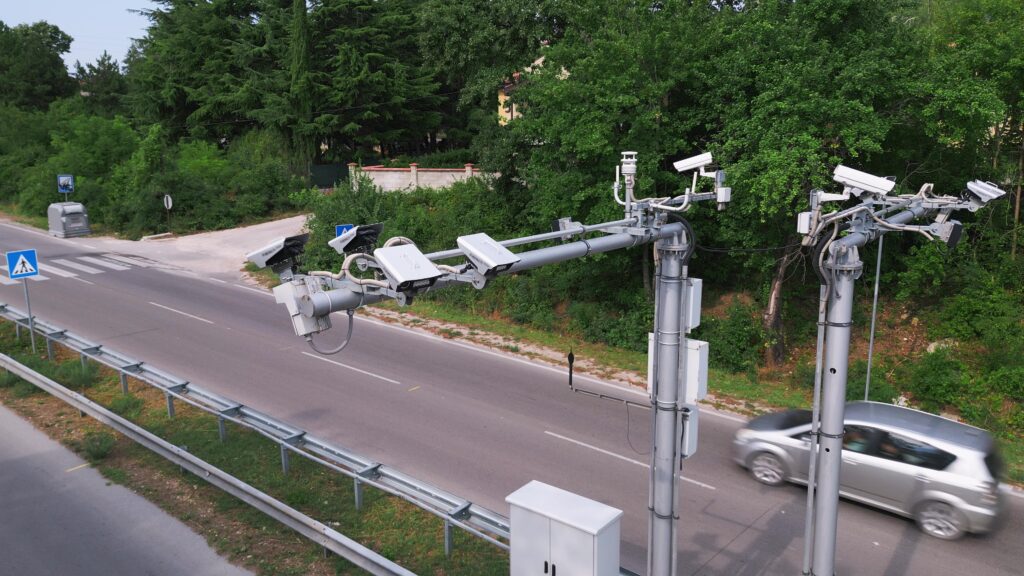
That's where digitization comes in. A modern heavy traffic monitoring is not just a surveillance tool, but a complete infrastructure management system.
By installing license plate recognition (LPR) cameras at strategic points, the city can:
The LPR system turns heavy traffic from a problem into a sustainable source of income for road maintenance. The principle is simple: whoever wears out the infrastructure, contributes to its repair.
Cameras discourage illegal transit. Hauliers will take the detour routes intended for them or pay the fee, knowing that monitoring is constant and unbeatable.
Local police can't monitor every entrance 24/7. An LPR camera provides clear reports: „On date X, 100 trucks were in transit, 30 of which did not have a permit.” Everything is stored digitally, eliminating human error.
The amounts collected from transit fees and fines are revenues to the local budget with a clear purpose. They can be reinvested directly in pavements, but also to other projects of local interest, creating a healthy financial circuit.
Heavy traffic monitoring is not a measure against carriers, but a form of respect for public money. Local government has a duty to protect investments already made and to ensure safe roads for citizens.
With LPR technology, we transform road management from a reactive pothole-fighting to a proactive development strategy.
Interested in implementing such a system in your locality?
1. Is it legal to charge heavy traffic on municipal/county roads? Yes. According to Romanian legislation, local authorities (Local Councils) have the right to establish special charges for the use of road infrastructure by large vehicles. These are approved by a Local Council Decision (HCL) and must be properly signposted with tonnage signs.
2. Can LPR camera images be used to issue automatic fines? Currently, the LPR system serves as a support tool for Local Police or Tax Administration. The system generates alerts and reports with the necessary evidence (license plate number, time, gauge), on the basis of which officers can issue tickets or issue notices of payment for unpaid transit tax.
3. What happens to local farmers' agricultural machinery? The system is extremely flexible. White lists can be created for local residents, local farmers or emergency services. They will be automatically recognized by the LPR cameras and will not be charged or reported as breaking the tonnage restrictions.
4. How resistant are LPR cameras to adverse weather conditions? Modern monitoring systems are designed for outdoor use (IP67 standard). They use high-power infrared (IR) illuminators and image processing algorithms that enable license plate recognition with an accuracy of over 98%, even at night, in fog, rain or snow.
5. How quickly does the investment in such a system pay back? Depending on the volume of traffic, the investment can be recouped in 6 to 12 months. The money comes from two sources: the rigorous collection of tolls (LT) that were previously ignored and the massive reduction in asphalt repair costs by discouraging illegal transit.
6. Can these cameras be integrated with other Smart City systems? Absolutely. LPR software platforms are usually interoperable. Data can be integrated into a single command center, used for public safety (identification of stolen cars or car chases) or for local parking management.

At Quartz Matrix, we are dedicated to our clients' digital transformation and business success through innovative and high-performance solutions.